

Chevy Malibu Vs. Impala Comparison
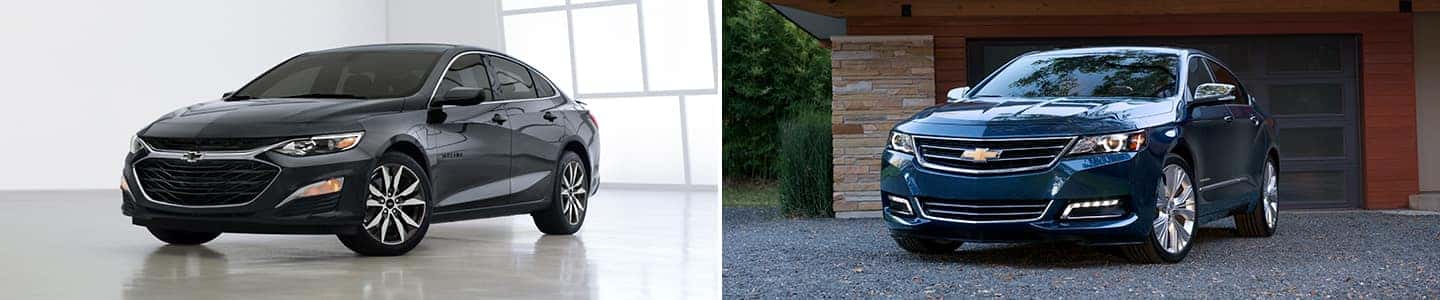
If you’re interested in a car that will keep chugging along for years to come and look good doing it, compare the Chevy Malibu vs. Impala. Both of these sporty sedans have numerous safety and technology features that come standard and engines that roar through highways on long trips. Think SUVs get to have all the fun? Plenty of adventures await in either of these impressive Chevy sedans. We compare car specs on the Chevrolet Malibu vs. Impala below.
Two Sizes of “Yes We Can” Sedans
Sedans are a terrific car because they’re so useful and dependable. They fit where big vans and hefty SUVs can’t, offer fuel-efficiency that only hybrids can beat, and are generally less expensive than larger options.
The Chevy Impala vs. Chevy Malibu is no exception. They offer Chevy’s tried-and-true performance and are capable of getting you wherever you need to go.
The 2020 Chevrolet Malibu and 2021 Chevy Malibu are mid-sized sedans that prove that big things come in small packages. The 2020 Malibu measures in at 193.8 inches lengthwise and 57.6 inches from the floor to the roof. This space translates well into a roomy, well-organized cabin available with premium cloth, perforated leather, and leather seat trims. A maximum cargo space of 15.7 cu. ft.1 means that all five of your passengers will be able to bring their suitcases, stuffed animals, sleeping bags, and other travel accessories without hesitation.
The 2021 Chevy Malibu measures up in similar figures at 194.2 inches long and 57.9 inches tall.
The 2020 Chevrolet Impala is a full-size sedan, but what exactly does that mean? The Impala measures a full seven inches longer than the Malibu, and this translates most directly into additional legroom. You will be able to fully stretch out with 39.8 inches of legroom in the back seat and nearly 46 inches up front. Also, the Impala adds three cubic feet to the Malibu’s trunk total, leaving room for another duffel bag or two. There is no 2021 Impala, but there are plenty of models that resemble the previous Impala in our selection of used cars.
Design-wise, the two sedans both have aerodynamic contouring and stylish detailing that capture the eye. In general, the Malibu stands out as a modern marvel, matching multifaceted performance that handles city and highway demands easily with a sporty, no-nonsense shape. The Impala comes from a long line of iconic designs, many of which are restored in the driveways of classic American car lovers all the time. It appears a bit more muscular and striking as it comes into view than its little brother does.
Check Out the Trims From Within
Another standpoint worth comparing the Chevy Malibu vs. Impala from is the engine and its efficiency. As you might expect, the Impala is built to spring forward like the agile antelope it’s named after. The Malibu prioritizes making your gas last, as it returned superior figures in EPA-estimated city and highway MPG.
As you compare each trim and its starting MSRP below, note these engine specifications:
The Malibu L through to LT models are powered by a 1.5L Turbo 4-cylinder engine with a continuous variable transmission. The Premier model boasts a more energized 2.0L Turbo 4-cylinder engine with a 9-speed automatic transmission under the hood.
Drivers that prioritize utility and fuel-efficiency will want to put the Malibu in their driveway. Both the 2020 Chevrolet Malibu and the 2021 Chevy Malibu have an impressive EPA-estimated 29/39 city/highway MPG.2
- 2020 Chevrolet Malibu L – Starting at MSRP3 of $22,095
- 2020 Chevrolet Malibu LS – Starting at MSRP3 of $23,220
- 2020 Chevrolet Malibu RS – Starting at MSRP3 of $24,220
- 2020 Chevrolet Malibu LT – Starting at MSRP3 of $26,620
- 2020 Chevrolet Malibu Premier – Starting at MSRP3 of $33,320
- 2021 Chevy Malibu L – Starting at MSRP3 of $22,140
- 2021 Chevy Malibu LS – Starting at MSRP3 of $23,270
- 2021 Chevy Malibu RS – Starting at MSRP3 of $24,270
- 2021 Chevy Malibu LT – Starting at MSRP3 of $26,670
- 2021 Chevy Malibu Premier – Starting at MSRP3 of $33,370
The 2020 Chevrolet Impala comes in two trims, each of which is powered by a V6 engine and six-speed automatic transmission that zooms past the Malibu. Enjoy a smooth ride that remains stable and soothing even as you accelerate past a lane-clogging truck or around a creaky old city bus.
- 2020 Chevrolet Impala LT – Starting at MSRP of $31,620
- 2020 Chevrolet Impala Premier – Starting at MSRP of $36,720
Since the Impala is only available at the trim levels with more premium features, you’ll enjoy the comforts of available heated leather front seats, keyless entry, and a power-adjustable driver’s seat and steering wheel. If elite options inside the cabin and feeling the hair on your arms rise as you accelerate are your type of thing, the Impala may be the choice for you.
Frequently Asked Questions
Is a Chevy Malibu the same as the Impala?
The Chevy Malibu is not the same as the Impala. The Malibu is still in production and smaller than the Impala, being a midsize sedan segment vs. the Impala’s full-size sedan. The Impala has a 2.5-liter four-cylinder or 3.6-liter V-6 engine, and the Malibu offers a 1.5-liter turbo four-cylinder engine. Their features compare, but the Malibu boasts more advanced technology.
Is the Chevy Impala larger than the Malibu?
Yes, as a full-size sedan, the Chevy Impala is larger than the Malibu’s midsize classification. Specifically, the final-year 2019 Chevy Impala measured 201.3 inches long, 73 inches wide, and 58.9 inches tall with an 18.8-cubic-foot trunk. The 2023 Chevy Malibu is 194.2 inches long, 73 inches wide, and 57.9 inches tall with a 15.7-cubic-foot trunk.
Do the Chevy Impala and Malibu have the same engine?
The Chevy Impala and Chevy Malibu are equipped with different engines suited to their unique size segments. In its final model year of 2019, the Impala offered a 2.5-liter four-cylinder with 197 horsepower or a 3.6-liter V-6 engine with 305 horsepower. The new Malibu has a 1.5-liter turbocharged four-cylinder engine with 160 horsepower to drive its lighter body.
You Can’t Go Wrong
Congratulations! You’ve laid out your priorities and visualized what the open roads of the future will look like in your new Chevrolet sedan. Based on that, you should know which model you’re selecting. If you still can’t decide between the Chevy Malibu vs. Impala, we encourage you to give our showroom a call, or visit us in person near Dallas, TX. We’re proud to help Texans find their next used vehicle and to provide amazing resources for all prospective car buyers like this used car buying checklist.
Our vehicle experts can explain anything under the hood. They’ll take you through each step of our hassle-free process and quell any concerns you might have about your next car.
Further Your Automotive Research Near Fort Worth, TX:
| Reasons Why Engine Light is On | Missed Car Loan Payment Impacts | Bad Credit Car Lot Dallas, TX |
| Toyota Corolla vs. Honda Civic | Kia Optima vs. Hyundai Sonata |
Disclosure:1 Cargo and load capacity limited by weight and distribution.
2EPA-estimated 29 MPG city/36 highway with 1.5L engine.
3 The Manufacturer’s Suggested Retail Price excludes destination freight charge, tax, title, license, dealer fees and optional equipment.